In the world of heavy-duty lifting and industrial automation, the demand for high extension ratios within a compact retracted length is a constant challenge. The 4 stage hydraulic cylinder provides the perfect engineering solution to this problem. By utilizing a telescopic design, these cylinders can reach impressive heights while occupying minimal space when collapsed. Whether it is for hydraulic platforms, aerospace applications, or specialized construction machinery, understanding the mechanics and benefits of a multi-stage system is key to optimizing operational efficiency. In this comprehensive guide, we will explore how these components work and why they are essential for modern industry.
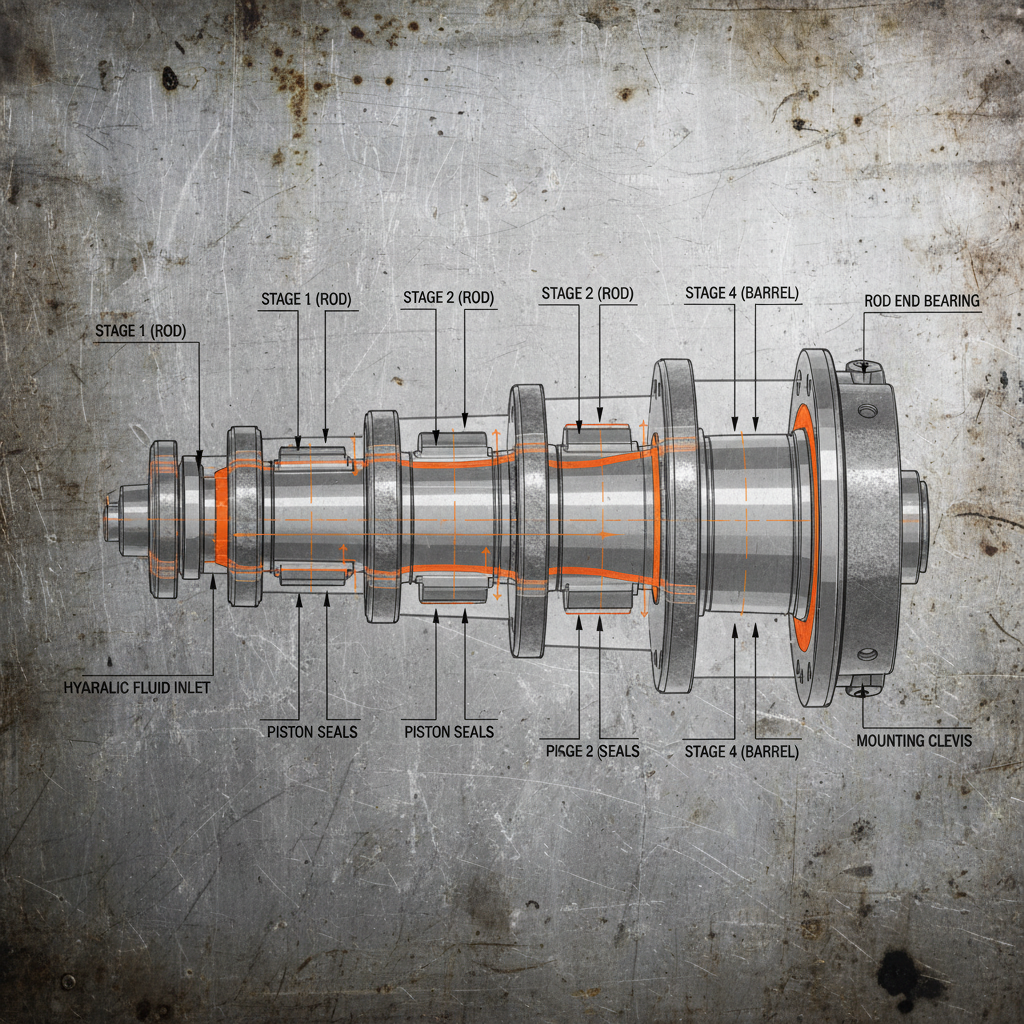
A 4 stage hydraulic cylinder, often referred to as a telescopic cylinder, consists of a base tube and three subsequent stages (sleeves) that slide inside one another. When hydraulic fluid is pumped into the cylinder, the pressure forces the stages to extend sequentially, starting from the largest diameter to the smallest. This nested design allows the tool to achieve a stroke length nearly four times its collapsed height. Precision machining and high-grade sealing are critical here to ensure that fluid does not leak between the stages, maintaining consistent lifting power throughout the entire extension process.
Pro Tip: The sequential extension is governed by the surface area of each stage; the stage with the largest area typically extends first because it requires the least pressure to move.
The primary advantage of choosing a 4 stage hydraulic cylinder over a standard single-stage cylinder is the space-to-reach ratio. In applications like dump trucks or lift tables, there is often limited room for the cylinder when it is retracted, but a requirement for significant vertical reach. By using four stages, engineers can eliminate the need for bulky external linkages. Additionally, these systems are designed for high stability and load-bearing capacity, ensuring that even at full extension, the cylinder can handle the rated tonnage without buckling.
When deciding between a 2-stage, 3-stage, or a 4 stage hydraulic cylinder, the decision usually comes down to the required stroke length versus the available installation space. While more stages provide more reach, they also introduce more seal points. However, for extreme reach requirements, the 4-stage model is the industry standard. The following table illustrates the trade-offs between these common configurations.
The versatility of the 4 stage hydraulic cylinder makes it an indispensable component in several high-stakes industries. In the trucking industry, these cylinders are used in tipper bodies to ensure the load is dumped at a steep enough angle to clear the bed. In warehousing, they power specialized high-reach lift tables that move heavy pallets to mezzanine levels. Furthermore, they are utilized in emergency services for telescopic ladders and stabilizers. The ability to provide massive extension from a small footprint ensures that equipment remains portable and efficient.
To ensure the longevity of your 4 stage hydraulic cylinder, adhering to strict technical specifications and maintenance schedules is non-negotiable. Using high-quality chrome-plated steel for the stages reduces friction and prevents corrosion. Regular inspection of the seals is necessary, as the telescopic nature of the cylinder exposes the internal stages to environmental contaminants during operation. Below are the typical specifications found in industrial-grade multi-stage cylinders:
Integrating a 4 stage hydraulic cylinder into your machinery is a strategic move to enhance reach without sacrificing space. From its sequential extension mechanism to its robust load-bearing capabilities, this component solves one of the most persistent problems in hydraulic engineering. By prioritizing quality materials and consistent maintenance, businesses can ensure a long service life and unmatched operational performance. When looking for reliable, precision-engineered hydraulic solutions, the 4-stage telescopic cylinder remains the gold standard for versatility and power.
The primary difference lies in the extension ratio. A standard cylinder has one piston and one rod, meaning its extension is limited by the length of that rod. A 4 stage hydraulic cylinder uses a telescopic design where multiple sleeves are nested inside each other. This allows the cylinder to extend to a much greater length while maintaining a very short retracted height, which is essential for applications with limited installation space but high reach requirements.
Yes, most professional manufacturers offer customization based on the specific needs of the application. Depending on the material used (such as high-tensile alloy steel) and the thickness of the cylinder walls, the operating pressure can be adjusted to meet the requirements of the project. Whether you need a low-pressure system for light lifting or a high-pressure system for heavy industrial loads, custom engineering ensures that the cylinder operates safely and efficiently within its rated limits.
Maintenance for a 4 stage hydraulic cylinder focuses heavily on cleanliness and seal integrity. Because the stages extend and retract, they can pull dust and debris into the internal seals. It is recommended to regularly clean the exterior of the rods and check for any scoring or scratches on the chrome plating. Using high-quality hydraulic oil and replacing filters regularly prevents contaminants from damaging the internal seals. Additionally, performing periodic leak tests can help identify seal wear before it leads to a total system failure.
Generally, yes. As you add more stages, the diameter of the innermost stage becomes smaller. Since the lifting force is a product of pressure and the surface area of the piston, the smallest (final) stage will have the lowest load-carrying capacity. Engineers must calculate the load requirements for the "worst-case scenario," which is usually when the cylinder is fully extended. If the load exceeds the capacity of the smallest stage, a different design or a higher operating pressure may be required to maintain stability.